


There are places in Florida that feel endlessly connected, layered with highways, hotels, and attractions. Flamingo is not one of them.
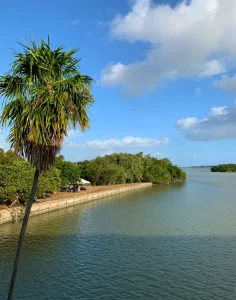
Located at the very southern end of Everglades National Park, Flamingo feels like the edge of the map, where roads narrow, silence deepens, and nature begins to speak more loudly than civilization ever could.
And that is exactly the point.
For travelers exploring Everglades things to do or wondering where to stay in the Everglades, Flamingo offers something profoundly different from the South Florida most people expect.
It is hard to believe that Flamingo exists within the same region as Miami’s skyline and beaches. Yet the journey from city to wilderness is dramatic and intentional.
As you drive south through Everglades National Park, commercial signs disappear. Gas stations vanish. Cell service weakens. The landscape flattens into endless water, sky, and sawgrass.
By the time you reach Flamingo, it no longer feels like you are near a city. It feels like you have stepped into another Florida entirely, one defined by tides, wind, birds, and light rather than nightlife or traffic.
This remoteness is not a flaw. It is the feature that makes Flamingo unforgettable.
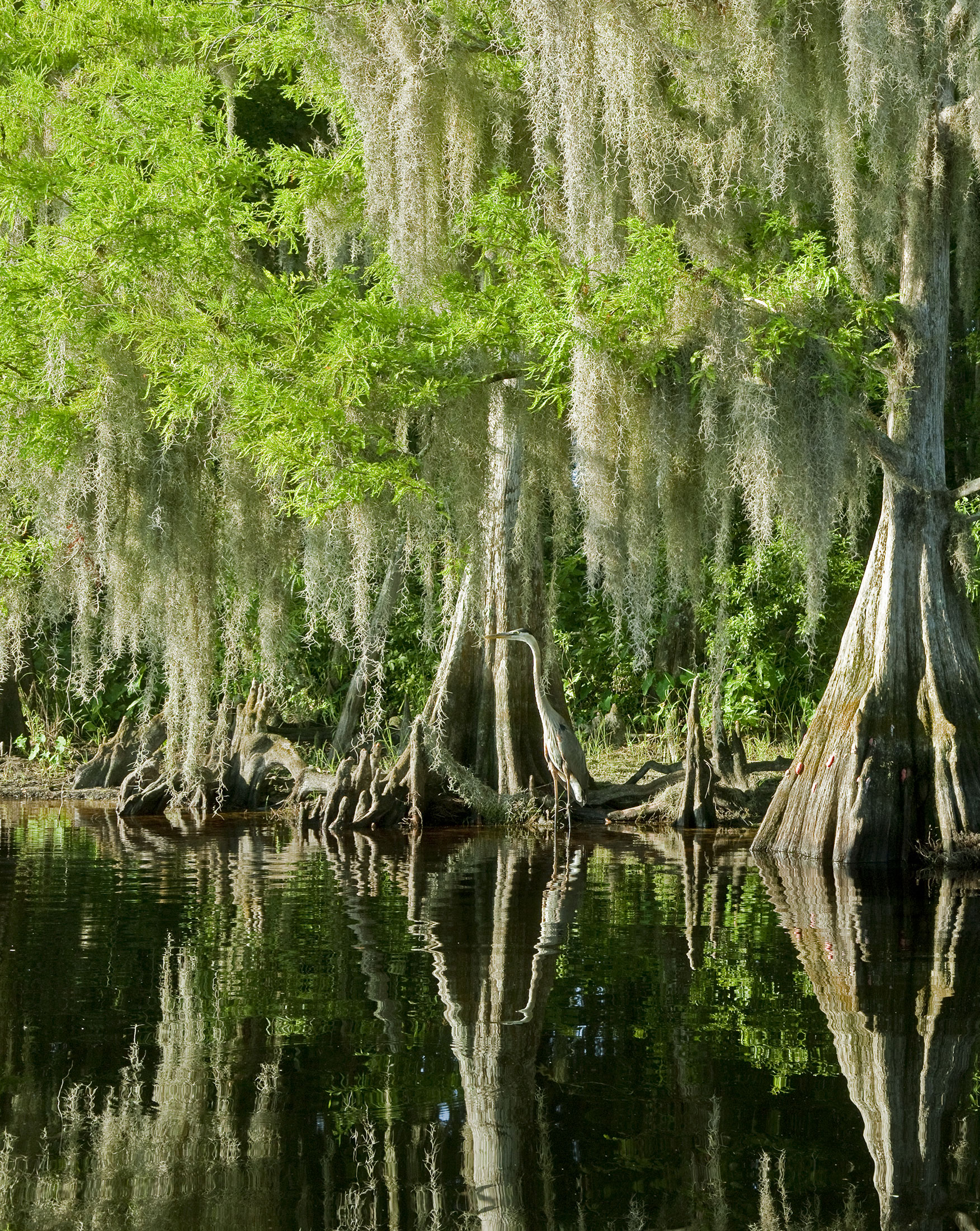
Flamingo exists because of wildlife, not in spite of it. The surrounding waters and wetlands support one of the richest ecosystems in North America.
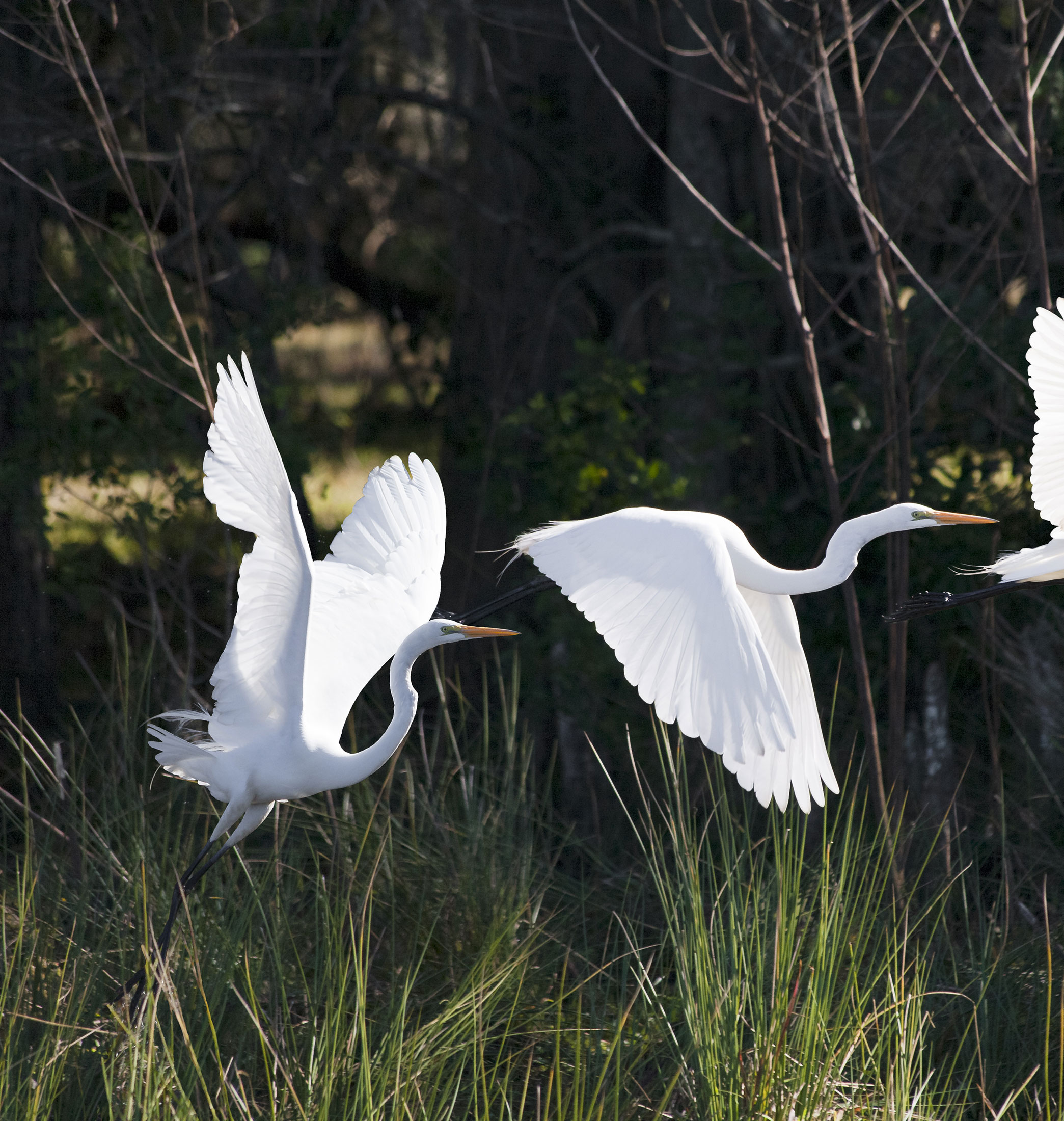
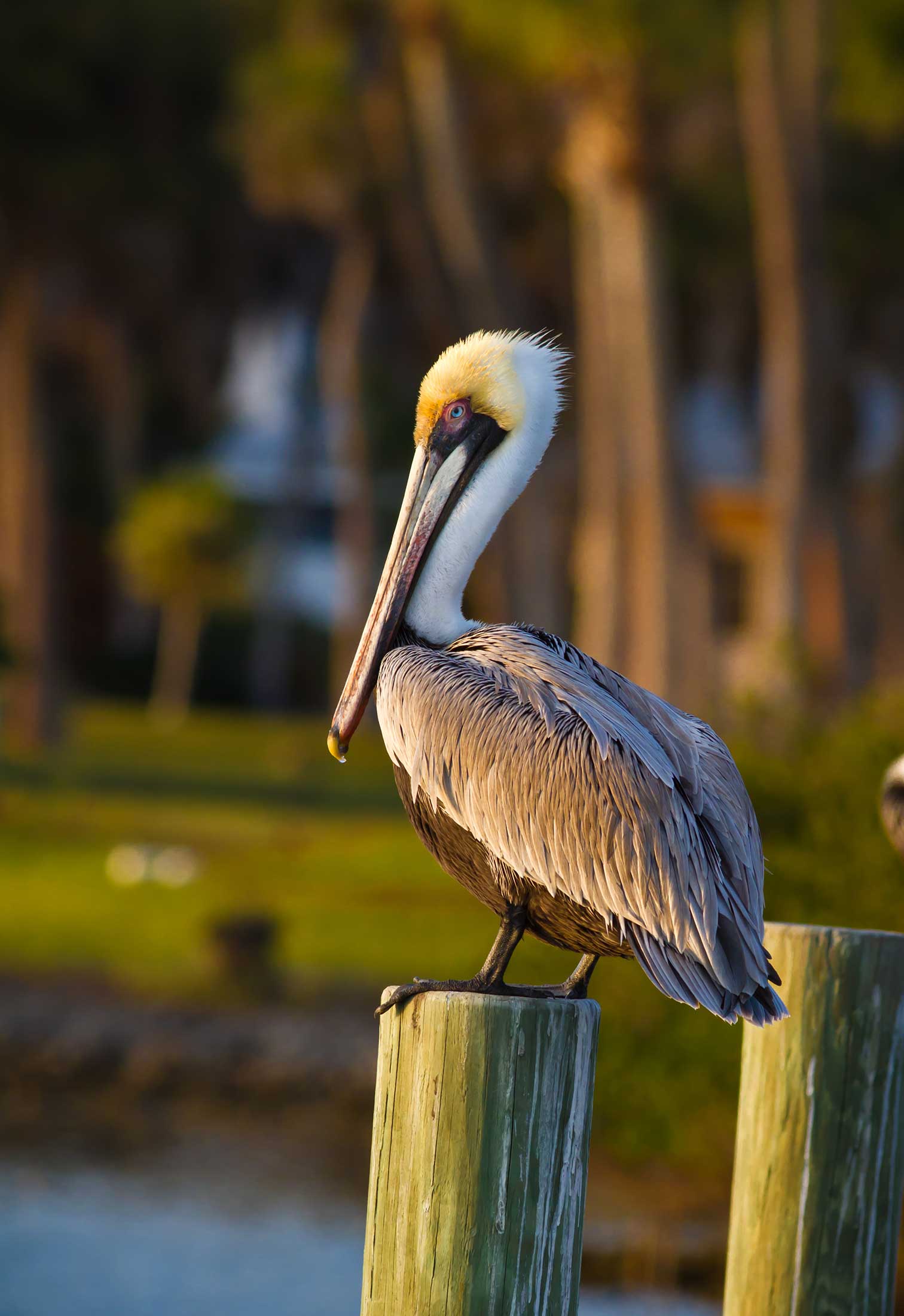
Manatees, crocodiles, alligators, dolphins, and countless bird species inhabit the waterways and coastal zones around Flamingo.
You do not visit here hoping to catch a glimpse of nature between activities. Nature is the activity.
Even simple walks near the marina or along boardwalks can reveal birds fishing at dawn, fish darting beneath the surface, and wind rippling through mangroves. The landscape feels alive in a quiet, watchful way.
This wildlife-first identity sharply contrasts with urban South Florida, where nature is often framed as scenery rather than substance.
Flamingo is shaped by water. Freshwater marshes meet saltwater bays here, creating a unique and fragile transition zone that supports diverse life.
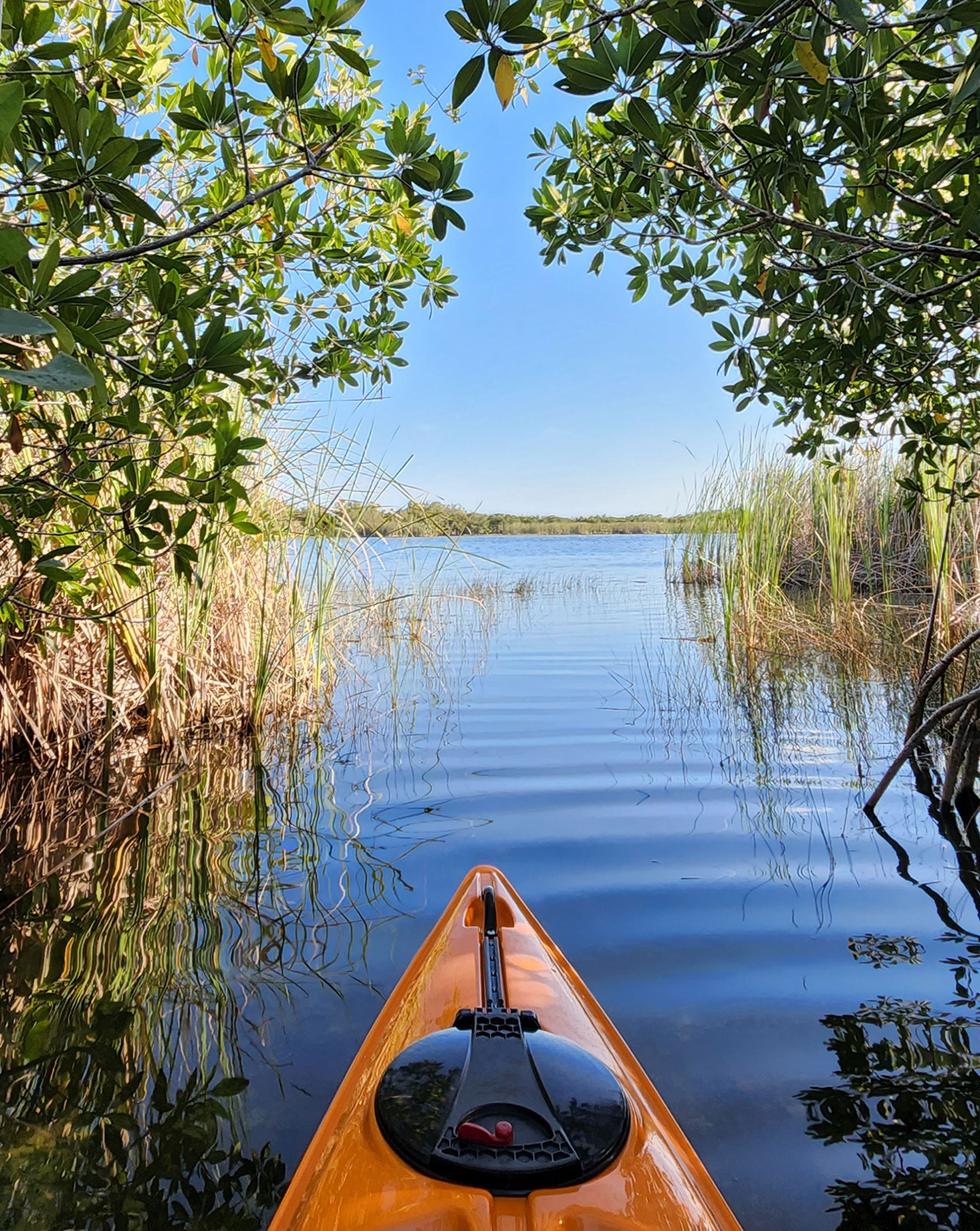
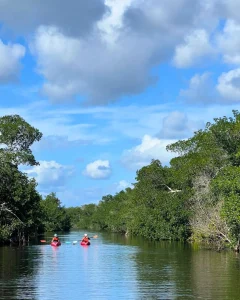
Boating, kayaking, and canoeing are central to experiencing Flamingo, not as recreation alone but as exploration. Moving through these waterways offers access to places unreachable by foot and perspectives that reveal the Everglades in its true scale.
Unlike fast-paced marine destinations elsewhere in Florida, these waters demand patience. Tides, wind, and weather dictate your movement. This forces visitors to slow down and engage with the environment rather than rush through it.
Understanding seasonality is essential when planning a visit to Flamingo.
The dry season, typically from late fall through early spring, offers cooler temperatures, lower humidity, and easier access to trails and waterways. Wildlife viewing is often excellent during this time, and outdoor activities are more comfortable.
The wet season, roughly from late spring through early fall, brings intense heat, afternoon storms, and a dramatic increase in insects.
Water levels rise, which opens some routes while making others more challenging. Wildlife disperses across a broader landscape, changing where and how you see it.
Neither season is better universally. They simply offer different experiences. The key is aligning your expectations with the conditions rather than expecting Flamingo to adapt to you.
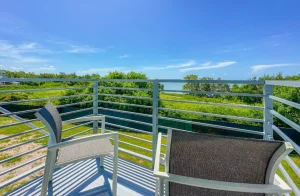
For those asking where to stay in the Everglades, Flamingo provides one of the few opportunities to sleep within the park itself, surrounded by wilderness rather than roads and resorts.
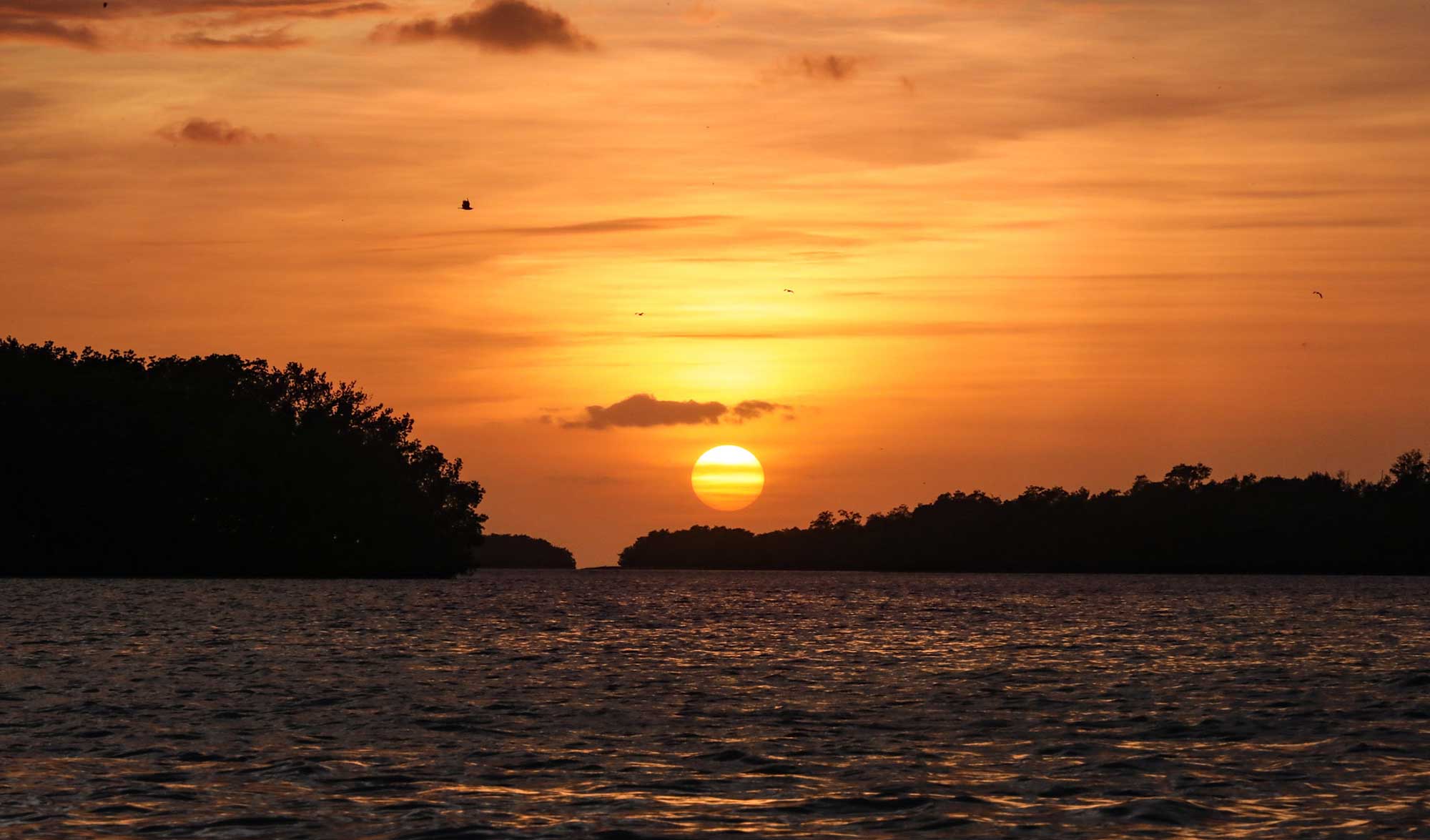
Staying here means trading luxury amenities for proximity to sunrise over open water, night skies uninterrupted by city glow, and the subtle sounds of the Everglades after dark.
This is not accommodation designed for indulgence. It is designed for access and immersion. And for travelers drawn to remote, nature-centered experiences, that trade is not just acceptable. It is desirable.
Many visitors arrive in South Florida expecting energy, color, and movement. Flamingo offers silence, space, and subtlety.
There are no shopping streets, no nightlife, and no casual conveniences. What you gain instead is the rare experience of being somewhere truly removed from urban influence.
Flamingo teaches you to notice small things: changing light on water, shifting wind directions, bird calls echoing across bays. It recalibrates your sense of what travel can be when consumption is replaced by observation.
Flamingo does not reward spontaneous drop-ins in the way urban destinations might. It rewards preparation.
Visitors should consider:
This level of planning is not a burden. It is part of what makes the experience feel intentional and meaningful.
Flamingo is not meant to impress quickly. It is meant to reveal itself slowly.
For travelers searching for Everglades things to do that go beyond surface-level sightseeing, Flamingo offers depth, quiet, and connection.
For those wondering where to stay in the Everglades, it offers not just a place to sleep, but a way to inhabit one of Florida’s last true wilderness frontiers.
And in a state so often defined by development, that makes Flamingo not just different, but essential.
Where is Flamingo located?
Flamingo is located at the southern end of Everglades National Park, far from Miami’s urban center.
Is Flamingo good for wildlife viewing?
Yes, Flamingo is one of the best areas in the Everglades for seeing birds, manatees, crocodiles, and other wildlife.
When is the best time to visit Flamingo?
The dry season from late fall through early spring is generally the most comfortable and accessible time to visit.
Can you stay overnight in Flamingo?
Yes, Flamingo offers accommodations and camping options within the park for visitors who want to stay immersed in the Everglades.
Is Flamingo suitable for families?
Yes, especially for families interested in nature, wildlife, and outdoor exploration rather than urban attractions.